

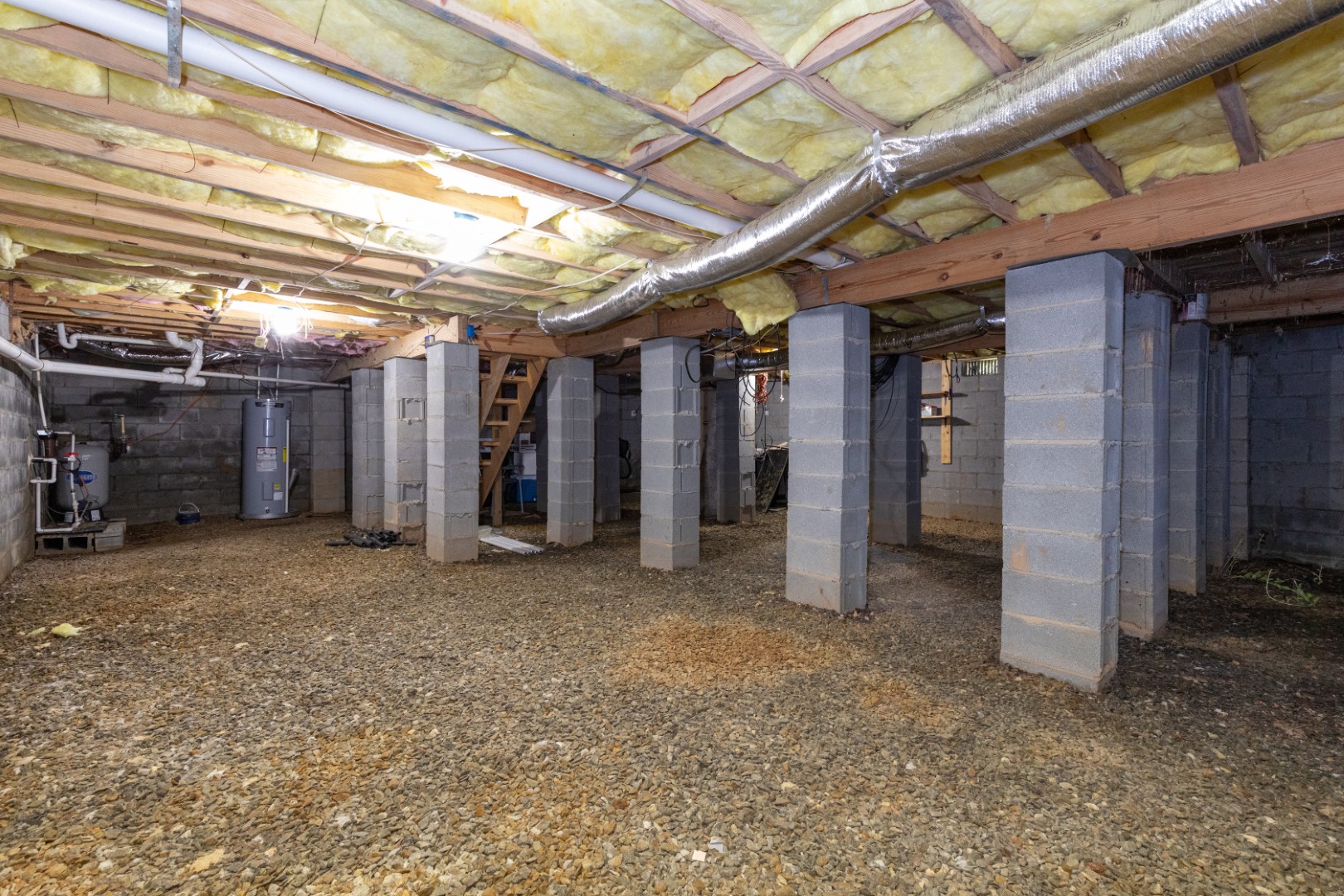
When doors stop closing right and floors feel uneven, most homeowners blame age or settling. But in Southwest Virginia, the real issue is often hiding beneath your home.
Neglected crawl spaces can quietly shift your structure and invite mold, long before obvious damage appears. Let’s go over some key crawl space warning signs.
Why Do Floors Sag?
Sagging floors often start with the soil beneath your home. Heavy clay expands when it absorbs moisture and shrinks as it dries, creating constant movement under your foundation. Over time, this shift puts stress on the structure above.
At the same time, excess moisture in the crawl space can weaken wooden joists. As these joints lose strength, they can’t hold weight as effectively causing uneven floors and that “soft” feeling underfoot.
Why Do Doors Stick?
Sticking doors are often a ripple effect of sagging floors. As floors begin to dip, the walls above them shift slightly out of alignment.
When that happens, door frames become uneven. This causes doors to rub, catch, or stop closing properly. It’s not just the door that’s the issue; it’s a sign the structure underneath is starting to move.
Spores and Saving the Floors
Excess moisture in your crawl space doesn’t just weaken wood; it also creates the perfect environment for mold spores to spread. That’s where crawl space encapsulation comes in.
By sealing off the crawl space from outside moisture, encapsulation helps prevent wood rot, mold growth, and ongoing structural damage.
Once the space is dry and controlled, homeowners can properly address any existing issues without worrying about them getting worse.
Don’t Ignore the Warning Signs
Sagging floors, sticking doors, and mold concerns all point back to the same place, your crawl space. Ignoring the signs can lead to bigger structural and moisture problems over time.
If you’ve noticed any of these issues, scheduling a professional inspection is the best next step to understand what’s really going on underneath your home.
Contact CrawlSpace Care today for a free inspection.